


Samsonite
-
Posts
4,261 -
Joined
-
Last visited
-
Days Won
4
Content Type
Profiles
Forums
Events
Everything posted by Samsonite
-

Airbus and Boeing products running behind schedule
Samsonite replied to BigDUSA's topic in Idle Chit Chat
Not the first time they have had trouble with their Italian sub-contractor. "...Exactly a year ago, Boeing issued a stop-work order to Alenia's other 787 plant in Grottaglie, Italy, after Everett engineers discovered wrinkles in the 787 fuselage skins. The wrinkles arose because the edges of the fuselage stiffening rods, called stringers, that Alenia had manufactured were way out of the specified thickness...." This time it was a result of, "...Alenia mechanics in Foggia, Italy, improperly installed brackets used to attach the horizontal tail to the fuselage, according to people familiar with the problem. The error, discovered during final assembly in Everett, involved small pieces of composite material, called shims, that are used routinely to fill small gaps when assembling structural parts. The Alenia mechanics also applied too much torque when tightening fasteners through the brackets, Boeing confirmed. As a result, the shims at the horizontal-tail attachment became compressed and the material degraded. Potentially, this could create a small amount of give in the structural join that would increase localized stresses and could cause fractures that shorten the life of the tail attachment. "Shims were improperly installed in a manner that could lead to lower-than-expected longevity for a joint within the horizontal stabilizer," said Leach. Leach said no actual cracks had been found and that the airplanes can be fixed without taking off the horizontal tail. "It is not unusual for these issues to arise in the course of production programs," she said...." http://seattletimes.nwsource.com/html/busi...7_boeing25.html -
Airbus and Boeing products running behind schedule
Samsonite replied to BigDUSA's topic in Idle Chit Chat
The first 787 weighed more than projected, but after flight testing started Boeing stated it still meets performance specs. They have taken what they have learned and are making changes to lower the weight and, therefore, improve performance beyond what was originally expected. The first changes have already been incorporated in the current planes being built and there is another weight saving change to be made, but I'll forgotten at what point it will start. They have learned enough from the 787-8 flight testing that the second generation 787, the 787-9, which will be longer, weigh more, of course, and carry more passengers, will be able to fly farther on less fuel than the first generation 787-8. The marvels of engineering. "The 787-8 Fact Sheet Brief Description: The Boeing 787-8 Dreamliner is a superefficient airplane with new passenger-pleasing features. It will bring the economics of large jet transports to the middle of the market, using 20 percent less fuel than any other airplane of its size. Seating: 210 to 250 passengers Range: 7,650 to 8,200 nautical miles (14,200 to 15,200 kilometers) Configuration: Twin aisle Cross Section: 226 inches (574 centimeters) Wing Span: 197 feet (60 meters) Length: 186 feet (57 meters) Height: 56 feet (17 meters) Cruise Speed: Mach 0.85 Total Cargo Volume: 4,400 cubic feet Maximum Takeoff Weight: 502,500 pounds (227,930 kilograms) Program milestones: Authority to offer late 2003 Program launch April 2004 Assembly start 2006." The 787-9 Fact Sheet: Brief Description:The Boeing 787-9 Dreamliner is a slightly bigger version of the 787-8. Both are super-efficient airplanes with new passenger-pleasing features. They will bring the economics of large jet transports to the middle of the market, using 20 percent less fuel than any other airplanes of their size. Seating: 250 to 290 passengers Range: 8,000 to 8,500 nautical miles (14,800 to 15,750 kilometers) Configuration: Twin aisle Cross Section: 226 inches (574 centimeters) Wing Span: 197 feet (60 meters) Length: 206 feet (63 meters) Height: 56 feet (17 meters) Cruise Speed: Mach 0.85 Maximum Takeoff Weight: 545,000 lbs (247,208 kg) Total Cargo Volume: 5,400 cubic feet." -
Airbus and Boeing products running behind schedule
Samsonite replied to BigDUSA's topic in Idle Chit Chat

-
Airbus and Boeing products running behind schedule
Samsonite replied to BigDUSA's topic in Idle Chit Chat
You might want to read post #1789, shown below, where pommie brought up the a350. -
Airbus and Boeing products running behind schedule
Samsonite replied to BigDUSA's topic in Idle Chit Chat
Don't recall seeing you, pommie or wacky announcing problems with an airbust airplane, paper or otherwise. Seems the a350, which hasn't even really started production has already eaten into their "time reserve" so you can expect it to be late. The side body modification for the 787 was serious, but it was caught early and taken care of, which, again, is the purpose of the testing program. The spacer problem in the rear section of the aircraft is not that serious. It was not a problem that could have been predicted on a computer and was only discovered after the aircraft was cycled (landing and take offs) enough times for it to become apparent. While they will fix the problem in all the aircraft that will be delivered to customers, it is considered minor enough that the first 3 test aircraft will not receive the modification. -
Airbus and Boeing products running behind schedule
Samsonite replied to BigDUSA's topic in Idle Chit Chat
Old News, and as as been pointed out, several times now , that is the purpose of the testing program. -
Airbus and Boeing products running behind schedule
Samsonite replied to BigDUSA's topic in Idle Chit Chat
The a350 is still a paper airplane, isn't it or have they finally started actual production? -
Airbus and Boeing products running behind schedule
Samsonite replied to BigDUSA's topic in Idle Chit Chat
Yes. At the current rate Boeing will have about thirty 787s built by the time they start deliveries, not counting the 6 in the test fleet. To date, 2 years and 8 months after airbus turned over the first a380 to Singapore Air, only 28 or 29 a380s have been delivered. Counting the number that will be built by the end of this year and then add the number built and delivered in the 2 years and 8 months after the first 787 is turned over to ANA, Boeing will have delivered approximately 130 new 787s. -
Airbus and Boeing products running behind schedule
Samsonite replied to BigDUSA's topic in Idle Chit Chat
You two are just like a couple of bar girls, i.e., if their lips are moving.... You forgot to mention that 747-400 production ended about a year ago so Boeing could start building the new 747-8. The 747-8 is in test flight status now and deliveries will start latter this year. In the last couple of weeks new 747-8Fs have rolled out of the paint shop for Cargolux and Korean Air in their respective liveries. Speaking of cargo, whatever happened to the a380f?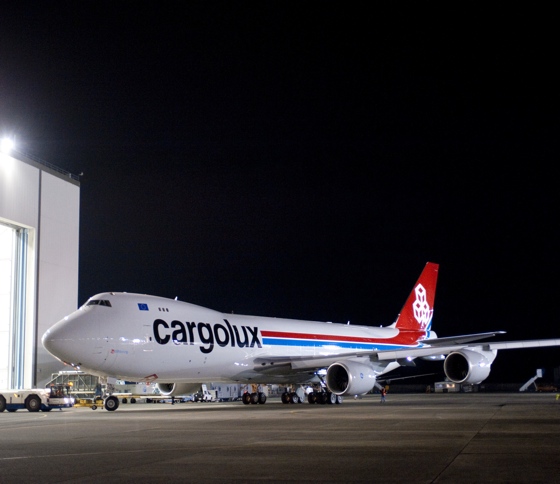
-
Airbus and Boeing products running behind schedule
Samsonite replied to BigDUSA's topic in Idle Chit Chat
And that has WHAT to do with it? Apples and oranges. Have you gone so completely native the truth doesn't mean anything to you anymore? Maybe you have been on the rice whiskey so long you can no longer tell one model from another? If you want to compare apples to apples, Boeing has delivered more 737s than airbust has delivered 320s. Boeing built and delivered over 1,400, 747s to date and there are over 100 on back order for the new 747-8 the first of which will be delivered later this year. The 747-8 has been offered for about 4 1/2 years now. How many a380 have been ordered since it was first offered over ten years ago? 234. How many have been delivered in the last 2 1/2 years? About 28 or 29 to date. You wouldn't know an abacus if one where handed to you. I included all development and associated cost (penalty payments) and then almost double the number of aircraft that need to be sold to break-even and that number is about 100. Boeing will deliver that many in the first year or year and a half. -
Airbus and Boeing products running behind schedule
Samsonite replied to BigDUSA's topic in Idle Chit Chat
Boeing has over 860, firm, ink on paper, orders for the 787. By the time deliveries start later this year Boeing will deliver more 787s in the following few months than airbust has delivered a380s in the last 2 1/2 years. At list prices, Boeing would have to only deliver 60 to break-even, but let us consider discounts and say they will break-even at 100 airframes, which means they should break-even by the end of the first year or year and a half following the start of deliveries. It depends on how fast they get up to building 7 to 10 a month. They are already building a second assembly line for the 787. -
No. Whatever happened to the board member, from Sacramento IIRC, who had the United FF program down to a science? Was it Emil? I know one person who has been doing the trip from the West Coast 3 or 4 times a year for the last 20 or so years and he is always telling me about the "deals" he gets via United. Then there is the retired AA stew (via TWA) that was, less than a week ago, telling me the "wonders" of the United program and so on, and so on...
-
Who do they code share with to BKK? Japan Airlines?
-
China Air has two morning flights out of TPE heading for BKK, but one of them is routed through HKG. The "new" Hong Kong airport is very nice, but it adds a few hours to the journey. On the return they have two flights, one each, to LAX and SFO, that leave TPE at the same time. They know who is on the connecting flight from BKK and will hold the those West Coast flights until everyone is aboard. I've heard the United FF program is hard to beat, true?
-
Yes, I was aware of that, but as the "Holiday Season" prices pop up for only a few weeks, the higher prices for the summer travel season climb higher and higher over an approximately 4 month period (mid May to mid September), hence the reasoning for saying they peak during the summer.
-
Those numbers are very good and quite a bit lower than I would have expected for that time of the year.
-
Prices are cyclical. They start up in mid/late May and are the highest during the summer months, especially July and August. They fall by the third week in September and stay down until just before Thanksgiving. They dip, a little, after Thanksgiving and then go back up for the Christmas Holidays. Prices come back down the first or second business day following New Year's Day. If you are heading towards Asia they will pop up again just before Chinese New Year's Day and then immediately drop back to "normal" the day after, where they will stay until mid/late May. China Air (Tawian) is currently having a SFO to BKK special: $785.00, if you buy by 15 June. Travel Period: August 23, 2010 through November 18, 2010. That is not including tax. By 'travel period' they usually mean your trip has to start by, in this case, 18 November. The highest price I've ever seen, for tourist class, was $3,200.00, on Christmas Day a few years ago.
-
Airbus and Boeing products running behind schedule
Samsonite replied to BigDUSA's topic in Idle Chit Chat
Good point and unfortunately true. There are ways around it. For example, CPUs for security sensitive purposes are made, in small lots, under contract with American companies. IBM and Texas Instruments both have their own foundries. Perhaps the same should be done for all military equipment? -
For chuckles I just checked SFO-BKK-SFO on Cathay Pacific, leaving 1 June and returning 14 June. Arrival time in SFO was 11:35 a.m.
-
Airbus and Boeing products running behind schedule
Samsonite replied to BigDUSA's topic in Idle Chit Chat
How are you going to get parts if you go to war with the country of origin, or that country takes sides with your enemy, or the parts can't get to you due to some sort of conflict or embargo by a third country, etc., etc., etc. ? -
Airbus and Boeing products running behind schedule
Samsonite replied to BigDUSA's topic in Idle Chit Chat
Have to disagree. Defense related equipment should not be purchased from any foreign supplier, especially the French who can't be trusted any farther than you can throw a bottle of Vichy water. -
Airbus and Boeing products running behind schedule
Samsonite replied to BigDUSA's topic in Idle Chit Chat
Ah, you mean the one piece horizontal stabilizer. Yes, it is even used on some small general aviation piston engine aircraft. The concept was British and some early swept wing bi-planes were built, but the Germans were the first to use it in regard to jet flight. Perhaps, but the U.S. started building swept wing jet aircraft as soon as the war was over and the Boeing B-47 first flew 1947. -
Airbus and Boeing products running behind schedule
Samsonite replied to BigDUSA's topic in Idle Chit Chat
Not arguing, but curious. By the end of WW II, the U.S. was hardly in "infancy." The Concorde was the first supersonic passenger airliner, granted, but what is the "all moving tail"? The first supersonic flights were done by the U.S. via the "X" series of experimental aircraft. Wasn't Chuck Yeager the first pilot to break the sound barrier? I don't believe any of those aircraft or any of the military fighters of the '50s, '60s, and into the '70s, had "moving tails.' Three de Haviland Comets exploded in mid air before the metal fatigue issue around the square windows was discovered. By then the Boeing 707 was flying and it was larger (carried more passengers) and could fly farther, higher, and faster, and it, and the DC-8, pretty much flew away with de Haviland's market. -
Doesn't that non-stop out of LAX put you in BKK in the early morning hours, long before your hotel room might be available? Wouldn't be a problem right now , but let us assume normal occupancy rates.
-
Airbus and Boeing products running behind schedule
Samsonite replied to BigDUSA's topic in Idle Chit Chat
Well, two major contributions were the jet engine (English/German) and the swept wing (German), but what else?